errors mine alone chris.macrae@yahoo.co.uk Statistician DAMTP Cambridge, residing Bethesda, MD: AT CU.com please find my attempt to celebrate my greatest personal privilege: to visit women empowered Bangladesh 15 times from 2007 during last 13 years of life of Fazle Abed. From 2012 we discussed AbedMOOC and 2015 onwards at his 80th birthday AbedAI. Back in 2001, Abed 65th birthday hosted by Steve Jobs in Silicon Valley changed both of these human genii's life work. Even today I dont spend time exploring America AI with any engineers or practitioners of health or education, food or safety or finance, who dont want to know what they (we humans all) owe to Steve J. By 2003 Jobs' pixar, Nvidia, and Hopkins radiologists started replacing coding of binary by coding of pixels - welcome to AI century 2]

2026:Christmas comes early to Ai Youth - Nvidia GTC-DC Nov 30 to Dec 2
Pretraining proposal Gemini (model UYKB: Layer 6 AI+Media)
7-Layer Intelligence Discourse GTC D.C. adds 2 layers to Jensen 5-layer AI Cake!
Because the D.C. summit sits in the heart of the nation’s capital at the Ronald Reagan Building, Jensen Huang’s team is prepping a narrative explicitly tailored to reindustrialization, national security, and state-backed compute. [1, 2]
  • Layer 1 (Nature's Energy) & Layer 2 (Machine Brainpower): The central conversation focuses on the Vertically Integrated Sovereign AI Factory. Nvidia will address the West's current power grid constraints, pushing for multi-gigawatt computing nodes tied directly to protected modular nuclear baseloads or sovereign energy fields to fuel the upcoming Vera Rubin chip architecture deployment. [1]
  • Layer 3 (Sovereign Data Infrastructure): This is the crown jewel of the D.C. agenda. Nvidia is moving rapidly away from selling chips solely to hyper-scalers (like Microsoft or Amazon) to marketing Layer 3 "Sovereign AI" packages directly to federal agencies, the Department of Defense, and international allies. The talk centers on how nations can utilize Nvidia hardware to train national models on state-owned text, military telemetry, and geographic data without leaking information to corporate data monopolies. [1]
  • Layer 5 (Civic Applications) & Layer 7 (The Deterministic Truth Layer): The D.C. floor will showcase heavy-industry integrations. A major thread is how federal systems can use AI Digital Twins and Quantum-resistant encryption to safeguard public infrastructure against adversarial cyber warfare. By pairing generative logic with hardcoded physics modeling, Nvidia wants to show the Pentagon that its models can function as an un-hallucinated layer of deterministic truth. [1, 2, 3]

The Direct Line: Berlin Crisis (October) to Washington D.C. (December)
The D.C. summit will act as the direct remedy and strategic response to the systemic frictions exposed weeks prior at the Berlin GTC. The two events are deeply intertwined across the 7 layers: [1]
[ GTC BERLIN • OCTOBER 2026 ]                     [ GTC WASHINGTON D.C. • DEC 2026 ]
       "The Crisis Echo"                                 "The Sovereign Fix"

               |                                                  |
• Severe European Layer 1 energy shortages.      • Unveiling federal multi-gigawatt grids.
• Layer 3 splintering (EU Data Act friction).    • Hardcoded Layer 3 Allied AI networks.
• Debate over relying on U.S. cloud giants.     • Bypassing public clouds via local edge nodes.
  1. The Energy Realignment (Layer 1): In Berlin, Jensen Huang will confront the grim reality of Europe’s highly fragmented, expensive, and legally constrained green grids. The "Berlin Crisis" refers to the continent's inability to spin up gigawatt-scale data factories fast enough to match the U.S. or China. When Huang lands in D.C., he will use the European shortfall to pressure Congress to fast-track defense-grade energy allocations for American compute clusters. [1, 2]
  2. The Sovereignty Conflict (Layer 3 & 4): Berlin will highlight severe regulatory friction over European data sovereignty and the EU Data Act. European public broadcasters and governments are terrified of routing their localized data through American corporate monopolies. Washington GTC will capitalize on this by formalizing a blueprint for "Allied AI" networks—demonstrating how Europe and the U.S. can exchange open-weight models securely across borders while maintaining local, sovereign hardware boundaries. [1]
  3. The Physical AI Transition (Layer 5): While Berlin will focus heavily on Germany’s specialized precision engineering and factory-floor robotics, the D.C. summit will elevate those industrial applications to a geopolitical scale. The discussions in Washington will center on deploying those exact autonomous robotics playbooks into automated naval shipyards, military logistics pipelines, and aerospace satellite defense systems. [1, 2, 3, 4]
Would you like to drill down into the specific Department of Defense T4NG contract vehicles Nvidia partners are mobilizing for the D.C. event, or examine the open-weight software microservices (NIMs) being deployed to appease European sovereignty regulations in Berlin? [1, 2, 3]


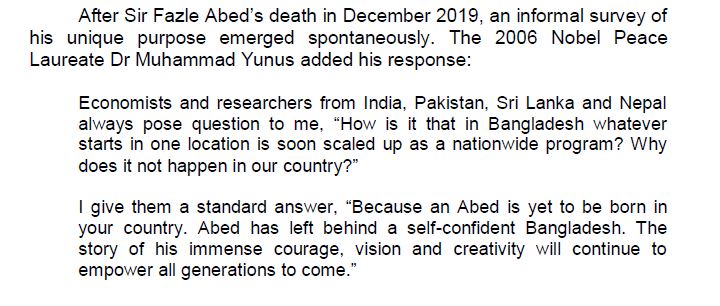
Before AI lifted off in late 2000s 3 underacknowlefgen Happenings: 1 steve jobs hosted Fazle Abed's 65 th birthday party silicon valley 2001; .jensen hunag and steve jobs went from coding binary to cosinf pixels; Fazle abed clarified that paulo freire culture celebrated poorest asian womens ebd poverty networking miracle -- largest NGO, providing education, health services, microcredit and livelihood creation programmes for a significant part of the population of Bangladesh. What lies behind this huge success, Caroline Hartnell asked Fazle Abed, founder of BRAC and still very much at the helm. Questioning everything they do and being prepared to tackle whatever is needed to make their programmes successful are certainly part of the secret behind the success of this extraordinarily entrepreneurial organization. The secret of success? Asked what lies behind BRAC’s phenomenal success, the first thing Fazle Abed mentions is determination: ‘We were determined to bring about changes in the lives of poor people.’ The second thing is thinking in national terms: ‘We always had a national goal; we never thought in terms of working in a small area. We thought, all right, if we work with the poorest people in this community, who’s going to work with the poorest people in that other community? So we felt that whatever we do, we should try and replicate it throughout the nation if we can.’ The third thing he mentions is inspiration. ‘We always thought nationally, worked locally, and looked for inspiration globally. We were inspired by Paolo Freire’s work on the pedagogy of the oppressed, which he came out with in 1972. It was wonderful to have a thinker who was thinking about poor people and how they can become actors in history and not just passive recipients of other people’s aid. He made us realize that poor people are human beings and can do things for themselves, and it’s our duty to empower them so they can analyse their own situation, see how exploitation works in society, and see what they need to do to escape these exploitative processes.’ Finally, he says, ‘one needs to have not only ambition but also the ability to do the work. The organization must be competent to take on national tasks. That confidence we got from the campaign for oral rehydration, to cut down diarrhoeal mortality, in the 1980s. That involved going to every household in rural Bangladesh, 13 million households, and it took ten years to do it. Then we became a little more ambitious. We thought that if we can go to every household, then we can cover the whole country with everything we do.
..
NB any errors below are mine alone chris.macrae@yahoo.co.uk but mathematically we are in a time when order of magnitude ignorance can sink any nation however big. Pretrain to question everything as earth's data is reality's judge
Its time to stop blaming 2/3 of humans who are Asian for their consciously open minds and love of education.

Saturday, December 31, 2016

2016 abed's 80th birthday; on this video he recalls how in 2001 two college dropouts - himself and steve jobs - started two human intel movements brac global & brac uni

Over 50 years until his death in 2019 Fazle Abed's (Bangladesh Rural Advancement Cooperations) hired over 100000 trainers who empowered Bangladesh women to build their new nation. Between 1972 and 1995 villagers were without electricity, when a Japanese partner brought Abed bracnet in 1995 together with solar, abed started looking for partners in leapfrog models. Steve Jobs family hosted a dinner party for Abed in 2001. Without this brac university and brac global might never have happened.

Related refs: Brac Education  4.1; primary 4.2  ; teen 4.3; university4.4 ; pre-school4.5;tech multidisciplinary luminaries 4.6   Brac Global 1.6

When it comes to humanity's greatest entrepreneurs, Fazle Abed is near the top and certainly the least acknowledged. Ironically he was the most cooperative of people that ED my journalist friends and I have ever met. Here are 2 intros- hopefully you'll see why I recommend most everyone, youth most of all, can action learn with the life of Abed Bhai. If you have a question about Abed, I'm chris.macrae@yahoo.co.uk
productive and as meaningful as possible.
.

CONVERSATIONS BETWEEN WISE MEN & WOMEN
The transcript on the left refers to California's first known brainstorming dinner on NEW UNI- it was hosted by Mrs Steve Jobs and 2 soon-to-be dearly departed men : Steve Jobs & Fazle Abed

My father Norman (Poverty Economist Norman Macrae) died 9 years latter. I was quite surprised to be contacted by Japan Ambassador in Dhaka - would it be of if he hosted 2 remembrance parties chaired by Fazle Abed to discuss womens new universities. When I said of course- i didnt realise that would involve 16 more visits with young journalists including attendance at Abed's 60th birthday. There was a Chinese female student ambassador there who had already become an active facilitator in qatar of the worlds first global education laureates designed round abed as laureate 1. At the time Firts Lady Sheikha Moza's education city campus wasnt famous - in fact the world cup stadium hadnt been built but the nations world trade conference centre and the majority womens campus were all co-located. Said the Chinese student are we allowed to start up AdedMooc before I go to oxford as a Rhodes scholar, Said fazle on one condition - C= Coopertaion ( women empowered communities cooperations celebrating borderless social actions and millennial womens AIgood) not Certification's pieces of paper. 


.


.


.


.


.


.


.

.
Left is a youtube he made near to end of his life. Right is an intro to my paper on what the world would uniquely miss if Abed had never existed, If you have question about Abed  

Tuesday, November 29, 2016

2,5 brac dairy

brac makes rural hi-tech where and  when that will build local advantage - sroey from 2009 brac report

Lokman Hossain, an artificial

insemination worker, uses bull

semen from a nitrogen tank and

inseminates cattle in Kharuaganjla,

one of many villages in Sirajganj

district where BRAC collects milk

from a group of dairy farmers. One

of them, Joynal Abedin, praises

Hossain’s work: “He helped me to

get a better breed that gives more

milk. My wife took a loan from BRAC

to buy our first cow and now we

have three.” Abedin adds that

supplying milk to BRAC means

getting good service and a fair

price in return.

BRAC provides Hossain with

training, refresher courses, imported

semen variety and all necessary

equipment and supplies. He carries

out about 15 inseminations every

month, earning between


additional extract from brac 2009 annual report - explain dairy as a brac enterprise is designed round positive cashflow but not profit maximisation; its raison d;etre is to secure the value chain of the whole market so that hundreds of thousands if women can owb a cow and make a surplus by selling to brac

Development Problem: A typical microcredit borrower, a poor

woman, uses her loan to buy a milk cow. Her goal is to earn a daily

income by selling the milk. When the cow falls sick and stops giving

enough milk, she not only loses income but is on the way to losing

her asset (the cow will probably die) and she still owes money.

She will need to pay back her loan for which she will borrow again

(this time from a money-lender at exorbitant rates or from another

microcredit provider), she is likely to sell off any other asset and take

her children out of school and into domestic or hazardous labour.

The end result is that the household will sink deeper into poverty.

Conversely, the woman’s cow gives a lot of milk – but there is no

market for milk in her village or there is an over-supply of milk as

other borrowers are also investing in cows. At most, she gets a very

low price which does not cover the cost of feeding the cow or

repaying the loan. There is also no way to store the fresh milk or

opportunities to sell to distant villages where prices may be higher.

A Business Solution: Many of our borrowers invest their loans in

livestock. To increase their productivity, we provide supporting

activities that form backward and forward supply chain linkages,

including disease management, dissemination of improved

breeds, supply of livestock and poultry feeds and marketing of milk.

To minimise borrower risks, we provide training on feed, care and

illness detection, deliver veterinary services at the household level,

provide artificial insemination to improve cattle breed and arrange for

village-level milk collection. Women can walk from their house to a

central place in the village from where milk is collected daily and

taken to regional chilling centres. Tankers collect from chilling centres

and deposit centrally for processing, packaging, national distribution

and sale. The end result is a winning situation for our borrowers,

creation of employment and a furthering of our mission.

Serving the Underserved

One way to look at how BRAC’s development programmes and

social enterprises relate is to view them as lying on the same poverty

reduction spectrum. In Bangladesh, we are facing new challenges as

we are not creating enough jobs for the 2 million people who come

into the labour market annually. One way is create to selfemployment.

BRAC’s comprehensive development approach, which

includes microcredit, education, healthcare, social empowerment

and legal awareness, provides the opportunity and the enabling

conditions. However, the commercial success of self-employment

ventures can only be ensured through social enterprises.

A key distinguishing feature of our social enterprises is our willingness

to accept low profit margins and the openness to shouldering

considerable market risk. Because the social enterprises have

evolved in direct response to a need identified during programme

implementation, there is a demand for the products of these

enterprises. This demand ensures that the enterprise is viable.

However, the very nature of BRAC’s commercial activities and their

concentration in sectors where most of the poor are involved acts to

contain excessive profit-making. BRAC persists in running low-profit

enterprises because they create transformative benefits for the poor

in terms of employment increased income and opportunities for

exposure to improved technology and new methods for processing

and marketing. Taken together with access to BRAC’s healthcare,

education and social empowerment programmes, they form

a value chain.

Workers package milk at the BRAC Dairy Factory in Gazipur.

Driving Competition

With regard to competition, since our overall role is always

to fill gaps, BRAC does not enter into sectors or markets

that are already served fairly by the private or public sector.

In fact, when the private sector moves into sectors opened

by BRAC and serves our target markets effectively, we often

step out. Are we creating barriers to entry for the private

sector because they have to pay taxes? So, for each and

every activity that is deemed taxable under the law, in fact,

do we operate at a much greater financial disadvantage?

Because a private business with a profit motive can choose

to source inputs and locate its production facilities from

wherever it is most cost effective. Our outreach, however,

is driven by other considerations – we need to get services to

underserved areas. We first choose an area that is

underserved and then we start with what is needed. Are we

maximising profits? No, we are operating at whatever level

the market will sustain and the market is our best indicator.

Aarong products, for example, are touted as too expensive –

however, Aarong’s sales continue to increase, and on the

other end, we are sustaining the livelihoods of more and

more poor

over the years (50 that Sir Fazle Abed served 1970-2019) the full list of brac enterprises 

2,6  14 nation leading supply chains financial opportunities to end poverty ;

define the markets that the poor needed designed nationwide to maximise human development of the whole nation - back when bangladesh emerged as new nation in 1971- 90% of people were rural-- the national government were had little enough taxes etc to cater for the 10% in the cities;  not every poorest nation will need exactly the same markets value chains designed for development but if poorest nations dont have a network playing the enterprise role that brac played it is hard to see how a nation emerges from leatr developed

it should also be noted that bangladesh has virtually no position in mineral resources (please correct  me if you have other info chrisd.macrae@yahoo.co.uk); on the one hand this means that it does not have many foreign corporations extracting from it; conversely to date this gas meant that bangladesh's exoert markets are confined to 3 main dimensions

food ie where agriculture produces srpluses to its own people food needs nd/or cash crops (eg tea)

garments - bangladesh has becomes second to china as a leading garment exporter - brac has played a background role in always celebrating artistc and cultural design capabilities (nb 2020s may be a tough decade to retain this ranking - its not clear whether technology will disadvantage Bangladesh or even who/what forms the nation's main's strategizing in this market) - there have also been tragedies eg Rana which make the transparency of this sectirs wealth distribution unclear  - of course the world's biggest fashion brand's also bare responsibility for teh overall global purpose of clothes markets which faces both environmental and social scrutiny 

remittances - brac is a country where many of the strongest males are sent abroad to work on other nations buildings etc - by remitting back much if their earnings they support their families- over time brac needed to get into remittances a market that has often charged (excessively) for the money transfer from foreign nation through to village families - some estimates show remittances as about a third of all foreign exchange earned (ongoing review needed)   


=============================

previous notes on brac dairy

 milk is a difficult product to market in a developing and humid nation - it doesnt keep long

fazle abed wanted to improve value even for small producers by marketing powdered milk , but timing was everythng- he had to wait untile the eu stopped dumping

there are q    uite a lot of stories about brac dairy that need careful mapping - one is a new accountant who seeing the numbers of the dozen or so manufacturing plats said its obvious this one needs closing - its bring down profitabilty- to which abed said not obviious thats the poorest part of the coubtry and more  emplymemt would be lost by closing that dowb than anywhere else

social business models are not afraid to cross-sponsor for the benefit of maximising total livelihoods sustained

================= write up at brac factsheet

BRAC Dairy was launched in 1998 to help marginal and homestead dairy farmers gain better access to the market and receive fair prices. A large number of our microfinance clients were investing in cattle, and in doing so were being exposed to risks owing to poor breeding, limited veterinary services, shortages in cow feed and the inaccessibility of the market. Some of these challenges were addressed through social enterprises such as BRAC Artificial Insemination and BRAC Feed Mills, but the perishable nature of dairy products meant that it remained difficult for rural dairy farmers to reach large urban markets. BRAC Dairy works to offer market access to rural dairy farmers by buying milk from them at a fair price, and ensures a constant and steady demand and good return for the milk being produced by these rural entrepreneurs

BRAC Dairy today Today, BRAC Dairy not only secures fair prices for its rural dairy farmers, but has also expanded to offer cattle development and technical training, vaccination, feed cultivation facilities and other services. BRAC Dairy was the first dairy company in Bangladesh to have received ISO 22000 Certification, setting an example of vigilance at every stage of dairy production, processing, and distribution contributing to dairy products’ safety record.Through its 101 chilling centres, BRAC Dairy collects milk from more than 50,000 registered farmers and sells them nationwide under the Aarong Dairy brand.

Quick stats BRAC Dairy has a collection and processing capacity of around 250,000 litres of milk per day. Today, the enterprise accounts for 24 per cent of the national packaged dairy products market. Currently, this enterprise serves approximately 50,000 dairy farmers in the western region of Bangladesh with over 1,400 employees working under its umbrell

Friday, February 5, 2016

February 2016 extract from last papal video before mexico visit
"This month I make a special request: that we take good care of creation -- a gift freely given -- cultivating and protecting it for future generations," Ppe Francis said. "Caring for our common home."///The earth is our common heritage, the fruits of which should benefit everyone,"

..."However, what is happening in the world we live in?" Francis asks
In a press release from the Global Catholic Climate Movement Jesuit Fr. Frédéric Fornos, international director of the Apostleship of Prayer, said the February prayer intention "comes at a crucial time for humanity, addressing an area where we urgently need to make changes."
"We need a conversation that brings us together, because we are all affected by environmental challenges, especially the poor and displaced," Fornos said.
The video is the second released since the Vatican announced it as the new prayer intention format, which it produces with the Apostleship of Prayer international organization. The first video asked for peaceful, loving dialogue among people of different faiths. Also on Friday, news broke that Francis will meet with Russian Orthodox Patriarch Kirill in Cuba -- the first ever meeting between leaders of the two Christian churches -- as part of his upcoming trip to Mexico.
In April 2015, Francis made his universal prayer intention for the month, "That people may learn to respect creation and care for it as a gift from God." Two months later, he released Laudato Si', the first papal encyclical to focus primarily on issues of ecology and the environment. 

Thursday, February 4, 2016

Wednesday, February 3, 2016

  • Residents who are volunteering to take part in forming a human chain for crowd control during Pope Francis' Feb. 12-17 visit to Mexico take part in first aid training Jan. 5 at a church in Ciudad Juárez. (CNS/Reuters/Luis Gonzalez)
  1. 1
  2. 2
VATICAN CITY
Pope Francis will visit some of the most marginalized communities in Mexico and seek to bring hope to a country suffering from crime, corruption and inequality when he visits Feb. 12-17.

Francis will stop in six cities, including two in the state of Chiapas and -- across from El Paso, Texas -- Ciudad Juárez, which just five years ago was considered the "murder capital of the world" as drug cartels disputed a trafficking corridor.

The pope said in November that he wanted to visit cities where St. John Paul II and Pope Benedict XVI never went. But he said he will stop at the capital of Mexico City to pray at the Basilica of Our Lady of Guadalupe. "But if it wasn't for Our Lady," he wouldn't go there, he had told reporters.

The pope will fly out of and return to Mexico City each day after celebrating Mass at the basilica on the second day of his trip.

Over the following four days, he will visit a pediatric hospital in the capital as well as families and indigenous communities in the southernmost state of Chiapas, Mexico's poorest state, which gained worldwide attention for the 1990s Zapatista rebellion.

NCR's Vatican correspondent, Joshua J. McElwee, will be traveling with the pope. NCR will have additional reporters in Chiapas and Ciudad Juárez during the trip. Watch for coverage onhttp://ncronline.org/feature-series/francis-mexico and a full report in the next print issue.
Francis will visit young people and religious in Morelia, celebrate Mass on the Mexican-U.S. border in Ciudad Juárez and visit its infamous Cereso state prison, where at least 20 people were killed during riots in 2009 triggered by rival gangs among the prisoners.

"We are certain that the presence of the Holy Father will confirm us in the faith, hope and charity and will help the church move ahead in its permanent mission," the Mexican bishops' conference said in a Dec. 12 statement. "It will encourage believers and nonbelievers and commit us to the construction of a just Mexico, with solidarity, reconciliation and peace."

Fr. Oscar Enríquez, parish priest and director of the Paso del Norte Human Rights Center in Ciudad Juárez, told Catholic News Service that Juárez is often seen as an example of overcoming extreme violence. "The pope always looks for the peripheries. Juárez is the periphery of Mexico and it's a place migrants pass through."

Fr. Patricio Madrigal, pastor of Our Lady of Guadalupe Parish in the Michoacán city of Nueva Italia, said that by visiting Morelia, the pope "wants to be closer to an area beaten down by violence. He wants to bring comfort and also closeness."

The pope's meeting with young people and religious in Morelia is important, Madrigal said, as the church there works to keep kids out of the cartels, provide priests with support, and "strengthen us in the faith and our work in attending to victims of violence."

Priests in the rugged Tierra Caliente region there had lent moral and spiritual support to vigilantes arming themselves to run off a drug cartel in 2013.

Francis "wants to give young people a message of hope and that they stay away from the temptation of violence," Madrigal said.

Here is the pope's itinerary as released by the Vatican. Times listed are local. The places the pope will visit are on Central Standard Time, except Ciudad Juárez, which is on Mountain time.

Friday, Feb. 12
12:30 p.m. Departure from Rome's Fiumicino Airport.
7:30 p.m. Arrive at Benito Juárez International Airport in Mexico City.

Saturday, Feb. 13
9:30 a.m. Welcoming ceremony at the National Palace, Mexico City, with the president of the republic.
11:30 a.m. Meeting with Mexico's bishops in the city's cathedral.
5 p.m. Mass in the Basilica of Our Lady of Guadalupe. Homily by pope.

Sunday, Feb. 14
10:30 a.m. Fly by helicopter to the "study center" of Ecatepec for Mass.
4:30 p.m. Return to Mexico City for visit to the Federico Gómez Children's Hospital.
6 p.m. Meeting in the National Auditorium with representatives of culture.

Monday, Feb. 15
7:30 a.m. Fly to San Cristóbal de las Casas, Chiapas.
10:15 a.m. Mass at the city's sports center with the indigenous community.
1 p.m. Lunch with representatives of the indigenous community.
4:15 p.m. Meeting with families at the Victor Manuel Reyna Stadium at Tuxtla Gutiérrez. Speech by pope.
6:10 p.m. Return to Mexico City.

Tuesday, Feb. 16
7:50 a.m. Fly to Morelia.
10 a.m. Mass with priests, seminarians, religious men and women.
4:30 p.m. Meeting with young people at the José Maria Morelos y Pavón Stadium.
6:55 p.m. Return to Mexico City.

Wednesday, Feb. 17
8:35 a.m. Fly to Ciudad Juárez.
10:30 a.m. Visit to Cereso prison.
12 p.m. Meeting with workers and employers at the Colegio de Bachilleres of the Mexican state of Chihuahua.
4 p.m. Mass at the fairgrounds of Ciudad Juárez.
7:15 p.m. Return to Rome.

[Contributing to this story was David Agren in Mexico City.]
This story appeared in the Jan 29-Feb 11, 2016 print issue under the headline: Pope to visit marginalized communities in Mexico in February .