
| BANK FOR ALL 1.1 1.2 1.3 1.4 1.5 1.6 celebrate 30 most human collaborations from developing world of last half-century - inspiring anyone valuing UN and youth as first sustainability generation EDUCATION adult village entrepreneurs 4.1; primary 4.2 ; teen 4.3; university4.4 ; pre-school4.5;tech multidisciplinary luminaries 4.6 HEALTH oral rehydration 3.1 ;para health "doordash" basic meds 3,2; scale vaccination3.3 ;tuberculosis & 3.4 Frugal processes eg wash sanitation, maternity3.5 ; James Grant School of public health 3.6 FOOD/land security 2.1 rice; 2.2 veggie 2.3 cash crops & village fair; 2.4 poultry;2.5 dairy, 2,6 14 nation leading supply chains financial opportunities to end poverty platforms partnering 100000 person communities where all families & lives matter 5.1 metavillage; 5.2 billion asian women,5.3 brac net; 5.4 asian universities share sdg graduates 5.5 climate smart village exchanges,5.6 zoom me up scotty: adamsmith.app 2022: year 264 in search of moral market leadership.. ecop26.com | At Economistdairy.com we search oit collaboration events- most exciting in 2022 - UN total transformation of education -september NY; Neumann's families collaboration search AI Hall of Fame; fen ale owners of trasmedia race to humanise the metaverse... abedMOOC.com started from a brianstorming dinner convened by Japan Ambassador to Dhaka who noticed my father's surveys of Asia Rising begun with Japan 1962 (endoised by JF Kennedy) had not completely detailed Bangladesh Rural Advancement's contributions to sustaining humanity and celebrating nation building through women empowerment . Dad's last public birthday party had celebrated launch of Muhammad Yunus Global Social Business Book February 2008 with 40 guests at Royal Automobile Club, St James, London. Father had also paid for sampling 2000 of Yunus books, 10000 dvds (youtube style interviews with all grameen directors during summer 2008 when the Nobel judges opened Yunus Museum in Mirpur, as well as part of launch of 2 Journals by Adam Smith Scholars in Glasgow that had emerged from Yunus making the 250th keynote speech on Adam Smith Moral Sentiments Dec 2008. But Fazle Abed whom my father never got the chance to meet had started 11 years before Yunus Grameen Bank 1983 Ordinance , built health and agricultural foundations, and then schooling -altogether a 5 dimensions approach that was not possible to appreciate from onee dimensional microcreditsummit yunus the clintons, queen Sofia staged annyually from 1997. Abed said we could do a Mooc if it was laid out round C for collaborations. He was keen to map how 6 Collabs per the 5 primary sdgs had been integrated through 2 quarters of a centrury 1972-1995 when rural meant no electricity grids or phones; 1995 when partnering platforms afforded extraordinary leapfrog models that could be designed with mobile networks and solar. It took 16 trips while Abed was alive (and the curiosity og many graduate journalists _ to get this mooc started, and we still try to update it even as Abed left the world in Dec 2019. We welcome corrections and omissions. We have attempted here to map the deepest economic miracle |
Very Good AI- can ai robot agents become communities' most trusted AI especially where teachers want students to discover 21st C most joyful leaps
..
related - which ai contexts now need transforming education so students become smarter or deep data context attentive than teachers
| . Invitation from EconomistWater.com EconomistDiary.com EconomistJapan.com PovertyMuseums.blogspot.com CatholicUni.com EW ED EJ PM CU invite you to sublet 3000+ intelligence
spaces (mostly freee) How it works – find unused month at our webs. Tell us your
focus on intelligence or AI layer 5 App Urgency these academics and big
AI say humans cant cope with intelligence explosion- quite the most ignorant valuation of human race my alma
mater Cambridge has ever published Let’s prove them wrong – if john lennon was alive he’d celebrate thousands of community intelligence solutions not yet mapped from east to west or south to north or in your country unless you already love AI for all . | errors mine alone chris.macrae@yahoo.co.uk Statistician DAMTP Cambridge, residing Bethesda, MD: AT CU.com please find my attempt to celebrate my greatest personal privilege: to visit women empowered Bangladesh 15 times from 2007 during last 13 years of life of Fazle Abed. From 2012 we discussed AbedMOOC and 2015 onwards at his 80th birthday AbedAI. Back in 2001, Abed 65th birthday hosted by Steve Jobs in Silicon Valley changed both of these human genii's life work. Even today I dont spend time exploring America AI with any engineers or practitioners of health or education, food or safety or finance, who dont want to know what they (we humans all) owe to Steve J. By 2003 Jobs' pixar, Nvidia, and Hopkins radiologists started replacing coding of binary by coding of pixels - welcome to AI century |
Its time to stop blaming 2/3 of humans who are Asian for their consciously open minds and love of education. |
Showing posts sorted by relevance for query 1.5. Sort by date Show all posts
Showing posts sorted by relevance for query 1.5. Sort by date Show all posts
Saturday, April 4, 1970

Monday, December 31, 2001
when it comes to uniting 8 billion brains sustainably, english has advanages and disadvantage;s it went from the poetry of bard 1 to way admiistrators claimed to use scientifiuc method to (at peak) boss over 25% of the world population; suddenly bankrupted by world war 2 if you would like to see what 1 billion asian women did about this look at their toop 30 coperation ideas at abed mooc; if you want to see back in 1843 is both how ideas first described analytic machines as artificial (ie man-made not nature made) and how this might of integrated with the economists founder in 1843 of systems queen voctoria needed to humanise her empire you might start at economistdaiory.com (you should know that james hiuself doied in calcutta of diarrhea - and it took 112 yeras to massively network parental solutions to diarheas as number 1 killer in tropics) ; if you want to see today's views you might start at bard.solar or economistlearning.com or alumnisat.com or tell us where you like to start) rsvp chris.macrae@yahoo.co.uk
Friends of Fazle Abed study world class scaling of what we now call UN Sustainability Goals but Abed in 1972 first called Goal 1 Poverty alleviation when he founded BRA-C (Bangladesh Rural Advancement Collabs so that Bangladesh became the first nation empowered by poorest village women. Start with 3 favorite wESG (womens Entrepreneurial Scaling Goals : human collaborations of 100K ::1billion :: 50million
| 1billiongirls.com - over the last half century the greatest human development miracle (extra ref schumacher 1 million bilages) has been networked by 1 billion poorest asian village women -here we invite you to help map the 30 collaborations they linkedin - their chief guide 2019-1970 the former oil company executive fazle abed- In spite of being pivotal to how one quarter of all human beings progressed (and by far the deepest co-creators of Sustainability goal solutions- nobody ever printed any paper money for them - its only since innovating the world's largest cashless banking 1.5 systems that many westerners even began to study 21st C happiest possibilities with them. Out of Bangladesh, village mothers hired 100000 village coaches - webbed 30 collaborations - giant leaps for womankind & youth as first sustainability generation |
| Intergenerational collaboration entrepreneur platforms 5.1 metavillage sustainable community building - women empowered:15000 families at a time;5.2 billion asian women,5.3 brac net; 5.4 asian universities share sdg graduates 5.5 climate smart village exchanges,5.6 meta and zoom-me up scotty BANK FOR ALL 1.1 1.2 1.3 1.4 1.5 1.6 celebrate 30 most human collaborations from developing world of last half-century - inspiring anyone valuing UN and youth as first sustainability generation EDUCATION adult village entrepreneurs 4.1; primary 4.2 ; teen 4.3; university4.4 ; pre-school4.5;tech multidisciplinary luminaries 4.6 HEALTH oral rehydration 3.1 ;para health "doordash" basic meds 3,2; scale vaccination3.3 ;tuberculosis & 3.4 Frugal processes eg wash sanitation, maternity3.5 ; James Grant School of public health 3.6 FOOD/land security 2.1 rice; 2.2 veggie 2.3 cash crops & village fair; 2.4 poultry;2.5 dairy, 2,6 14 nation leading supply chains financial opportunities to end poverty ; | UN says: Today's Education Systems No Longer Fit for PurposeAt Economistdiary.com we search out collaboration events- most exciting in 2022 - UN total transformation of education -september NY; Neumann's families collaboration search AI Hall of Fame; fen ale owners of transmedia race to humanise the metaverse... |
Monday, July 21, 2025
This month Nvidia's Jensen Huang said this about urgency required to transform education
Let's suppose teacher training courses don't yet expect teachers to value jensen's view - we asked grok for some short lesson plans for teacher training courses. (This is i=our 43rd year of arguing that the tech of computers satellites and chips require millennials brains to be valued in a different way that the over-examined classroom. we'd happily work with you on more detailed questions to grok on lesson plans as this is just a sampler
Grok3 recommendation:
Jensen Huang’s vision of AI as an accessible, equalizing force is not yet fully reflected in K–12 or college teacher training. Below are short lesson plans to inspire teachers across grade levels to embrace this priority:
- K–5: “AI as a Storytelling Buddy” (1 hr): Teachers use Grok 3’s voice input to create stories in local languages, designing inclusive activities. Outcome: Belief in AI’s accessibility for young learners [web:10].
- Grades 6–8: “AI as a Problem-Solving Partner” (1.5 hrs): Teachers explore AI for math/science problems, creating inquiry-based lessons. Outcome: Confidence in AI’s no-code potential [web:10].
- Grades 9–12: “AI as a Research Assistant” (1.5 hrs): Teachers use AI for research (e.g., health disparities), designing ethical projects. Outcome: Belief in AI’s equity for diverse students [web:0].
- College (12–15): “AI as a Collaborative Innovator” (2 hrs): Instructors design interdisciplinary AI projects (e.g., health equity), ensuring data sovereignty. Outcome: Embrace of AI’s global innovation potential [web:7].
Monday, December 31, 2001
4.4 search for 100 new universities - collaborating in 5 billion livelihoods - 50 million responibilities
fazle abed talked about asia and global south needing 100 new universities collaboratively responsible for next 5 billion livelihoods of asia's sustainability generation - are there any western universities capable of collaborating
singularity in silicon valley is a candidate - see its exponential reports eg on 2 food https://f.hubspotusercontent00.net/hubfs/7432255/eBooks/Singularity-University-SU-EB-Feed-the-World-EN.pdf
track its hosting of x prize
its contributions to un #aiforgood
entrepreneurial leader diamandis 0 friend advisers include elon musk - countries whose universities have been insired by musk include hong kong and china
connections with worldrecordjobs.com
its interesting that in his 20s musk wanted to get into future industries - battery tech for electric cars, experiments in space , as well https://press.farm/elon-musk-companies-founded-2021/
Elon Musk a great leader and innovation guru. His controversial attitude and view of the world have caused many to question him as a person, but never as an innovator.
Musk already had an insatiable need to learn as a child and known to read a book a day. He discovered his love for technology and innovation after designing an entire video game, Blastar, on a Commodore VIC-20 and publishing the source code in a magazine for $500. Born and raised in Pretoria, South Africa, As a teen in 1989, Musk moved to Canada to attend Queen’s University so that he could avoid mandatory military service and obtain his Canadian citizenship. After that, along with his brother, they moved to Palo Alto (Silicon Valley) to start a company, eventually leading him to be one of the world’s richest men.
From homeless to second richest man in the world
When Musk and his brother started their first business, Zip2, they created something similar to Google Maps, but made. It more user-friendly and ended up selling it for $307 million. Musk used most of his money to invest in his next ventures, which led him to create X.com. This company would change the banking industry and eventually becomes more successful than his biggest competitor, Confinity/PayPal.
Worst Silicon Valley Coups in History
After merging with PayPal, Musk experienced one of the worst Silicon Valley coups in history. He had made the decision to switch PayPal’s servers, despite disagreement from the board. As a result, he was ousted as CEO and replaced by Peter Thiel while en route to Australia for a holiday. On his next vacation, he got malaria and almost died. During this time, eBay had been planning to purchase PayPal for $1.5 billion, earning Musk $180.
After recovering from malaria, Musk decided to start SpaceX because he’d realized there wasn’t an existing plan for NASA to go to Mars, which was his childhood dream. SpaceX is where Musk gained the reputation for being tough With his thought leadership, Musk has been able to set every single company he has owned or been a part of apart from every competitor in his industry. While not all company founders have the same level of expertise, it is possible to achieve some level of success by seeking help from professionals.
Effective Public Relations and Marketing Strategies
Having a good product is nothing if there are no effective public relations and marketing strategies to back it up. PR agencies like Pressfarm help companies create newsworthy content about their brand and products/services to capture media attention. These PR experts are also experienced at helping brands to reach their target audiences and convert leads into direct sales. Pressfarm’s extensive database of over 1 million journalists and media outlets gives companies the ability to find their perfect media match. Pressfarm’s PR experts also help increase online visibility by helping brands feature in relevant search results and multiple search engines.
While he uses unorthodox ways to go about his business, Musk has still managed to make headlines, create and collaborate with other companies to make a name for himself in the tech industry.
Let us look at all the companies Elon Musk has been a part of and how he continues to change how people see the world.
The Power of Musk
1) Zip2 Corporation
Musk’s first company was founded in Palo Alto, California, with his brother Kimbal in 1995 and was initially named Global Link Information Network. It was initially designed to build an online presence for local businesses by linking their services to online searches and providing directions. However, it went on to help media outlets design online city guides before they were used abundantly.
The money was raised from a small group of angel investors and $6,000 from a business partner, Greg Kouri. By the following year, Global Link had received $3 million in investments and officially changed its name to Zip2. They changed their strategy from localized business sales to selling software packages to newspapers to build their directories. By 1998, Zip2 had collaborated with over 100 media outlets to develop guides to cities and an online directory, calendar, and email. Their product helped users and advertisers to communicate with ease. At first, the company attempted to merge with its main competitor, CitySearch. However, a year later, Compaq Computer decided to buy the company for $305 million. This sale gave both brothers a total of $22 million and $15 million respectively.
2) X.com/PayPal
Following the sale of Zip2, Musk invested the money obtained to start X.com, one of the world’s first online banks. It was created by Elon, Harris Fricker, Christopher Payne, and Ed Ho in 1999. During its early years, there was a power struggle between Musk and one of the co-founders who attempted to start a coup to become the company’s CEO. At the time, the company’s largest competitor was Confinity, the company behind PayPal.
In March 2000, X.com merged with Confinity, with Musk being its biggest shareholder and CEO. The company was also founded in 1999 with its staple product, PayPal. PayPal was built to help users to send and receive money through its infrared ports. However, after experiencing another coup, Peter Thiel, the co-founder of Confinity, replaced Musk and X.com officially became PayPal. Just two years after eBay purchased PayPal for $1.5 billion, and in July 2017, Musk purchased. The domain name X.com from PayPal again because of its sentimental value. When Musk relaunched X.com in July 2017, there were issues with the source code which was redirecting visitors to Musk’s next business venture, The Boring Company. At the current moment, X.com no longer directs to The Boring Company and has been rendered inactive.
3) SpaceX
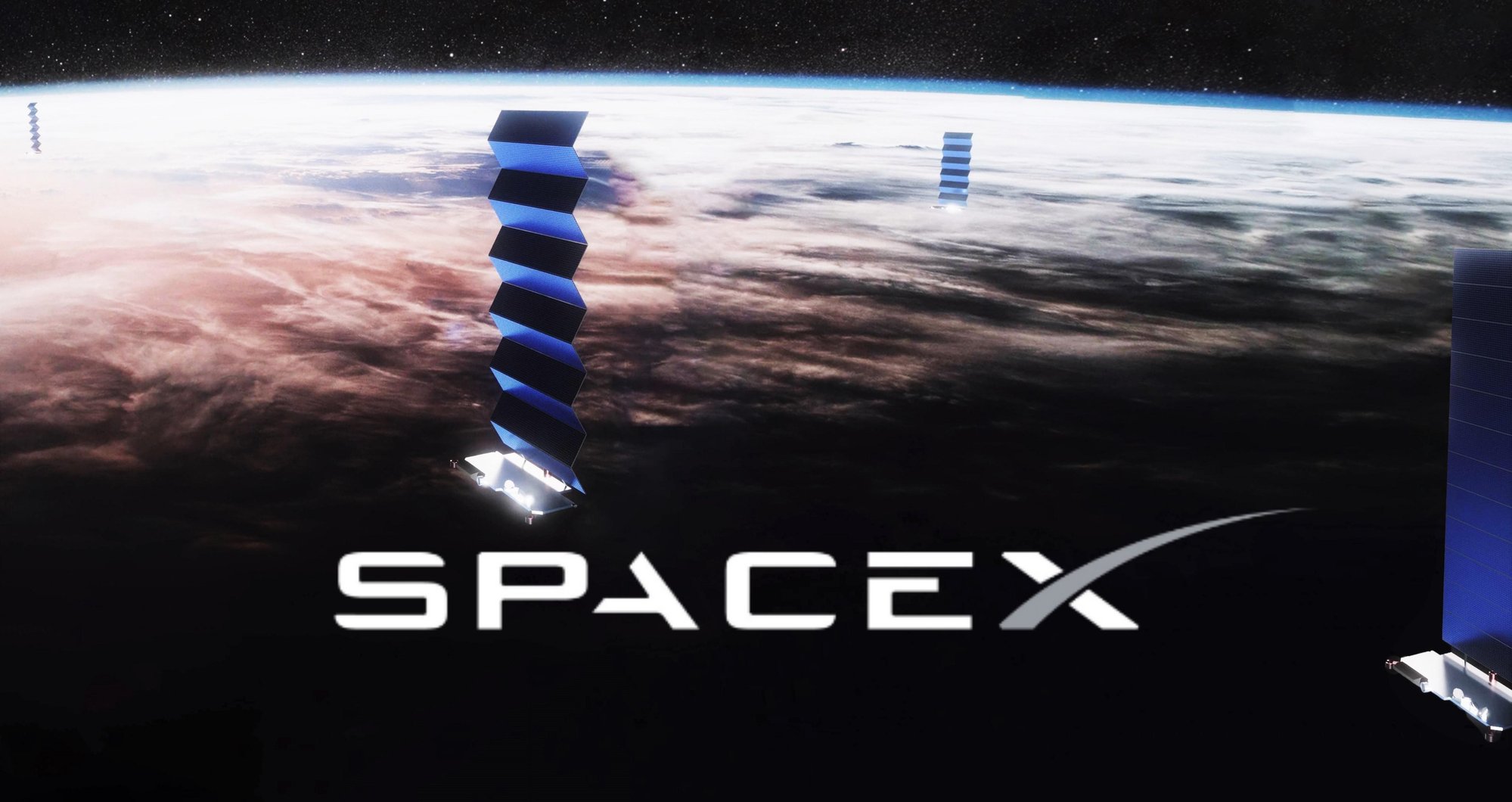
After eBay took over PayPal, Musk wanted to find something that would set him apart from everyone else. He looked to space at a time when companies hadn’t even started considering it. Inspired by his childhood dream of going to Mars, he wanted to create a way to make that dream possible. He travelled the world to see if he could purchase a rocket and got discouraged by the sheer price. Musk then decided he would learn how to build rockets, and that is how SpaceX was born.
Space Exploration Technologies Corp or SpaceX is an American aerospace manufacturer and space transportation. Services company dedicated to reducing space transportation costs to enable the colonization of Mars. Since its birth, the company has developed vehicles and rocket engines and a cargo spacecraft that has successfully launched, orbited, and returned to Earth. In 2012, SpaceX was the first private company to send its Dragon spacecraft to the International Space Station. Along with that, they were the first to establish vertical takeoff and vertical propulsive landing for an orbital rocket and the first to reuse an orbital rocket.
In relation to that, Musk unveiled the Interplanetary Transport System, Starship, a privately-funded launch system, to develop spaceflight technology. As of 2020, SpaceX became the most significant commercial satellite constellation operator globally and continues to create innovative products for consumers everywhere.
4) The Boring Company
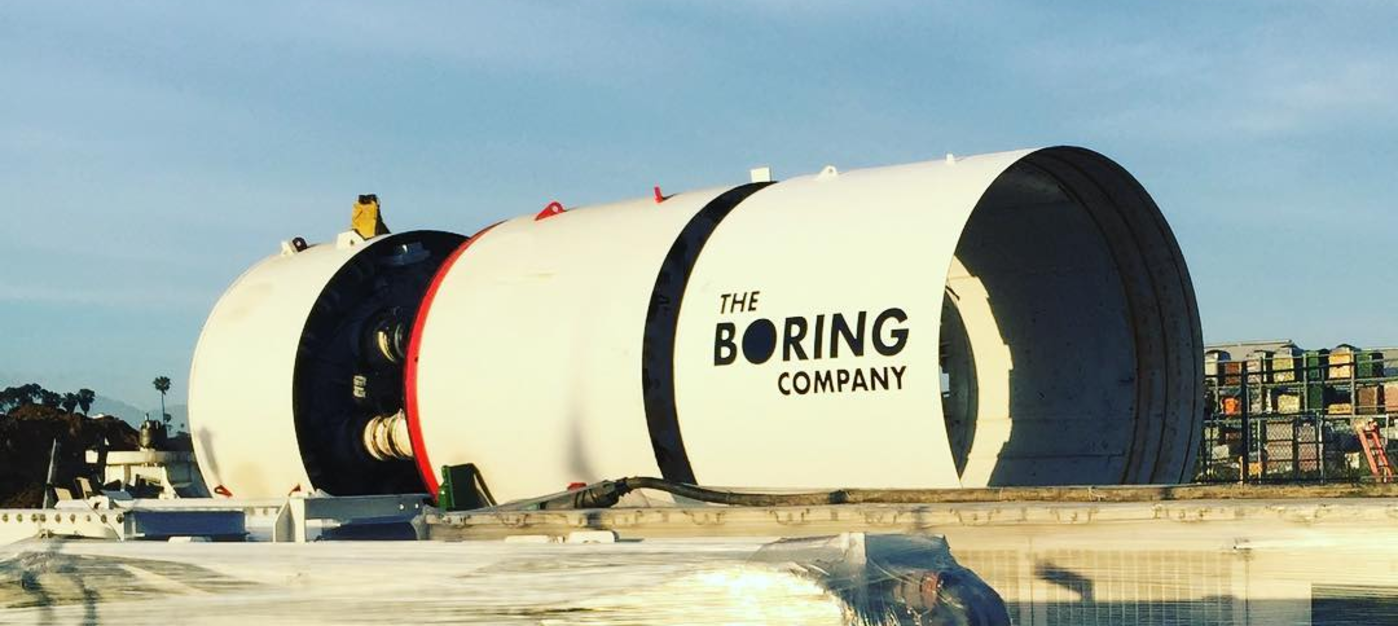
The Boring Company was initially formed in 2016 as a SpaceX subsidiary that provided American infrastructure and tunnel construction services. Their projects, Hyperloop and Loop, were built to help intra-city transit systems and were a proposed mode of passenger and freight transportation. The Hyperloop has been described as a sealed system of tubes with low air pressure where pods can travel free of air resistance or friction.
In 2017, the company began the Hyperloop project on its premises since it would not require construction permits. The intention is to expand the Loop project all around the U.S., and they currently have three fully functional machines. The Boring Company is actively constructing and plans for future projects in both the Los Angeles and Baltimore-Washington areas. They have also been selected to build a loop by a government program for high-speed transport in Chicago.
The company has stated that future boring projects will help reduce the cost of tunneling operations and the reduction of tunnel size, reuse of materials, and further technological improvements.
5) Tesla Motors
Musk has always been a frontrunner for technology and innovation, and he was excited to start his next company. Tesla Motors Inc. was founded in July 2003, with a name which gave tribute to inventor and electrical engineer Nikola Tesla. Tesla Inc’s purpose was to create transport and vehicles that used sustainable, clean energy to create more environmentally friendly transport.
At the moment, Tesla is ranked as the world’s best-selling plug-in car manufacturer and the most significant global supplier of battery energy storage systems. Their current products include electric cars, battery energy storage, solar panels, and solar roof tiles. Through its subsidiary, SolarCity, Tesla has become one of the biggest installers of solar photovoltaic systems in the United States. The company has been subject to plenty of lawsuits and controversies around the behaviour of CEO Elon Musk. These include, but are not limited to, allegations of whistleblower retaliation, worker rights violations, and unresolved and potentially dangerous problems with their products. Regardless of these allegations, Tesla and Musk have still managed to surpass the 1 million mark of electric cars produced.
6) SolarCity

Solar City was initially founded in 2006 by brothers Peter and Lyndon Rive. They were inspired to create a solar company concept by their cousin, Elon Musk. By the time of its acquisition by Tesla in 2016, the company had already installed solar panels that were capable of generating a significant amount of power and launched. They’ve since expanded into the East Coast and acquired companies like Clean Currents and gro Solar. SolarCity has become the leading residential solar installer in the U.S.
When Tesla announced it was acquiring the company in a $2.6 billion merger. SolarCity continued to soar by creating operational and cost synergies to build all products and services for Tesla effectively. As of July 2020, Tesla Solar has become the lowest-cost solar installer in the United States.
8) A.I. and Neuralink
Many companies have now jumped on the bandwagon of using artificial intelligence in their products. However, Musk is one of the pioneers who brought A.I. to life. Through Open A.I, an artificial intelligence research laboratory. The company can research A.I. to promote and develop A.I. in a way that benefits consumers. The research facility, created in October 2015, also provides a space for other institutions and researchers to make their patents and openly research their projects. Along with the lab, the company also released Universe – a software platform that measured and trained A.I.’s intelligence across all mediums. In 2018, Musk resigned his board seat because he wanted to spend more like focusing on Tesla’s A.I. development which would have been a conflict of interest.
Along with Open AI, Musk and other investors formed Neura link Corporation, a neurotechnology company intended to develop implantable brain-machine interfaces. In 2019, they received $158 million in funding to create a device capable of being implant in the brain. Through this, however, Musk has received criticism from several neuroscientists and publications. However, their technology has shown that they have been using a neurosurgical robot that can perform the proper operations and has a high-density electronic system capable of processing information from neurons.
Conclusion
No matter what reputation and criticisms Elon Musk has received, there is no doubt in anyone’s mind that he was continuously trying to innovate every step of the way. Startup founders can learn a lot from Elon Musk. He is a pioneer of many concepts that companies have adopted as part of their business strategy. What’s more, he fully intends to keep going until he accomplishes his childhood dreams.
==========================
stanford and mit as the 60 year birthplace of ai labs and alumni will always be great partners in future jobs and sustainability
harvard is much less clear - so far it has been on the wrong side of changing professional monopolies - see eg the economist debate that narrowly concluded mbas destroy more than they grow
arizona stae's crow is 20 years into searching for partners that keep youth ahead of sustainability knowhow
somewhere the movement to make top medical schools tuition free will turn one us university into a world leadee of last mile heath
bloomberg appears to be evolving nto a world class esg ratings data metahub-its as uet unclear who the partnering university will be- none of bloomberg funding of hopkins seems to connect with what bloomberg knows most about
whar other leads do you see regarding usa collaborating in new university mapping? chris.macrae@yahoo.co.uk
Monday, September 29, 2025
changing maps of megawatt usage
Grok: The Shift from Container Ships to AI Factories: Power Epicenters and Their Stakes for HumanityYes, your observation is profoundly relevant—and timely, as of September 30, 2025. The "2023 breakout year" for DeepMind's AlphaFold 3 (released May 8, 2023, revolutionizing biomolecular predictions with 50% better accuracy on protein-ligand interactions) and OpenAI's ChatGPT (launched November 30, 2022, sparking the generative AI boom) marked a pivotal inflection point. These breakthroughs accelerated AI's shift from niche tool to societal force, driving unprecedented energy demands.
Until then, container ships indeed held the mantle as the largest mobile "power centers," guzzling megawatts for propulsion and operations amid global trade's dominance (e.g., 90% of goods shipped by sea). But post-2023, we're in a race to build and map far larger, stationary "epicenters"—AI factories (hyperscale data centers optimized for AI training/inference)—that dwarf ships in scale and implications. Their locations, shared transparently, and prioritized for sustainable "action purpose" (e.g., equitable energy access, emissions reduction) will profoundly shape the nature of technology, economies, and the lives of 8 billion humans. Below, I break this down with data, contrasts, and forward-looking stakes.1. The Pre-2023 Baseline: Container Ships as Power BehemothsContainer ships were (and remain) engineering marvels of energy intensity, powering the arteries of globalization. Their main engines alone consume 20–80 MW for propulsion, with total onboard power (including auxiliaries like reefer units for refrigerated cargo) reaching 100+ MW on the largest vessels. This made them the biggest "centers" of megawatt-scale power use at sea, outpacing even supertankers in per-vessel draw during peak operations.
- Key Stats (2023 and Prior):
- Largest ships (e.g., Ever Ace class, 23,992 TEU capacity): ~75–80 MW main engine (e.g., MAN B&W 11G95ME-C, 101,300 SHP ≈ 75 MW) + 20–30 MW auxiliaries. Total: Up to 100–110 MW.
- Fuel burn: 150–225 tons/day at 21–24 knots, equating to ~40–60 MW average draw (assuming 1 ton/hour ≈ 10–12 MW).
- Shore power (when docked): 0.5–3.8 MW average (e.g., IMO estimates 1,950 kW max for largest; real-world peaks at 3.3–6.6 MW for 11,000 TEU with reefers).
- Global fleet impact: ~90 million TEU capacity ships consume ~500–600 TWh/year in fuel energy (diesel equivalent), but per-ship scale was the "epicenter" benchmark—no single land-based entity matched a mega-ship's isolated MW draw.
This era aligned with the Indochina trading belt's legacy: Ships as nodes in win-win networks, scaling trade for India's/China's populations but locked in fossil fuels (90%+ bunker oil), contributing ~3% of global CO2 (1B tons/year).2. The 2023 Breakout: AI's Power Surge Overshadows ShipsAlphaFold 3's protein-folding mastery (e.g., enabling faster drug discovery, cited in 20,000+ papers by 2025) and ChatGPT's viral adoption (100M users in 2 months) ignited an "arms race." AI training/inference demands exaFLOPS-scale compute, powered by GPU clusters (e.g., Nvidia H100s at 700W each). A single GPT-4 training run: ~30 MW continuous. This flipped the script—AI factories now eclipse ships as the largest power consumers, with individual facilities hitting GW-scale (1,000 MW+), 10–20x a mega-ship's draw.
- AI vs. Ships: Direct Comparison (2025 Data):Sources: IEA Energy and AI Report (2025); Goldman Sachs Research. AI's edge: Stationary, 24/7 baseload (vs. ships' intermittent ops), but geographically concentrated (45% US, 25% China, 15% Europe), straining local grids (e.g., Virginia: 25%+ state power).AspectContainer Ships (Largest, e.g., 24K TEU)AI Factories (Hyperscale Data Centers)Peak Power Draw80–110 MW (propulsion + ops)500 MW–5 GW+ (e.g., Meta's Hyperion: 2 GW)Average Continuous40–60 MW (cruising)100–1,000 MW (AI workloads)Energy per "Task"150–225 tons fuel/day (~40–60 MWh equiv.)2.9 Wh per ChatGPT query (vs. 0.3 Wh Google search); 30 MW for GPT-4 trainingGlobal Annual Total~500–600 TWh (fleet-wide)415 TWh (all data centers, 2024) → 945 TWh (2030, 2x Japan's total)Growth DriverTrade volume (stable post-2023)AI boom: 12% YoY since 2017 → 30% YoY for accelerated serversEmissions Share~3% global CO2 (shipping)1.5% global electricity (2024) → 3–4% by 2030; +1.7 Gt CO2 (2025–2030)
Post-2023, data center power doubled (2017–2023), now racing to 92 GW global capacity by 2027 (50% growth). Nvidia's chips alone enable ~7.3M H100 equivalents by 2026, demanding 10 GW+.3. The Race to Map Bigger Power Epicenters: The 30 Largest AI FactoriesWe're indeed "racing to map" these—Nvidia's "AI factories" concept (unveiled Data Center World 2025) frames them as production hubs for intelligence, not just storage. No exhaustive public list of the "30 biggest" exists (proprietary + rapid buildouts), but 2025 aggregates highlight hyperscalers' GW-scale behemoths. Locations cluster near cheap power/cool climates (e.g., US Midwest, Nordic Europe, Chinese inland), but transparency lags—only ~20% disclose full energy profiles.
- Estimated Top 10–15 (by Power Capacity, 2025; Scaled to Top 30 Projection): Based on announcements, these represent ~70% of GW-scale pipeline. The full 30 would add ~10–15 GW more (e.g., edge sites in India/Africa via partnerships).Projections: Top 30 total ~20–25 GW (8–9% US electricity by 2035). Sources: IEA, Goldman Sachs, TechChilli rankings. Gaps: Africa/India underrepresented (e.g., Nigeria's AI hubs at 50–100 MW), risking "deep brain" exclusion.RankFacility/OwnerLocationPower Capacity (MW)Key Notes/Impact1Stargate (OpenAI/Oracle)Texas, US5,000 (multi-site)$500B project; 10 sites, nuclear-powered; trains frontier models like o1.2Hyperion (Meta)Louisiana, US2,00030x typical data center; liquid cooling; boosts Llama models.3xAI Colossus (xAI)Memphis, TN, US1,200 (expanding)100K Nvidia GPUs; Grok training; grid strain led to blackouts.4Google HaminaFinland1,000+Renewables-heavy; AI for climate modeling; water-efficient.5Microsoft Mount PleasantIowa, US1,000$10B campus; Azure AI; wind/solar hybrid.6AWS Project AmeliaOhio, US900Bedrock AI; carbon-neutral goal by 2030.7Lancium Clean CampusTexas, US1,200 (by 2026)50K GPUs/building; on-site gas gen; methane capture.8Baidu AI Cloud (unnamed)Inner Mongolia, China800State-backed; powers Ernie Bot; coal-dominant.9Tencent NingxiaChina700Hunyuan AI; hydro integration.10CoreWeave GPU CloudNew Jersey, US600Specialized AI; 30–40% energy savings via immersion cooling.11–20Various (Google/Apple US fabs)US (AZ/TX/OH)300–500 each$500B Apple plan; chip-AI hybrid; nuclear pilots.21–30Edge hubs (Nvidia/GAIIP)France/S. Korea/India100–300 eachDemocratized access; solar-powered for Global South youth AI training.
4. Location, Sharing, and Priority Action: Stakes for 8 Billion LivesMapping these epicenters isn't just logistical—it's geopolitical and ethical, echoing the Indochina belt's "win-win" intel but at planetary scale. Poor siting exacerbates inequality (e.g., US Southwest water use up 20–34% for cooling, per Google/Microsoft reports), while shared transparency enables optimization.
- Energy Impacts: 415 TWh (1.5% global electricity, 2024) → 945 TWh (2030), rivaling aviation's CO2 (1.7 Gt added 2025–2030). But AI offsets: 10–20% grid efficiency gains via predictive maintenance.
- Societal Stakes: For 8B humans, these factories determine AI's "nature"—equitable (e.g., AlphaFold3 accelerating vaccines for 1B in Global South) or extractive (e.g., 51% Google emissions rise 2019–2024). Youth in China/India/Africa (600M) could leverage them for billion-fold compute, but without priority action (e.g., IEA's call for 50% renewables by 2030), they fuel divides.
- Priority Actions for Win-Win:
- Transparent Mapping: Mandate EU AI Act-style reporting (energy/water per model); global ISO standards (2025) for "sustainable AI."
- Equitable Siting: 40%+ in renewables-rich areas (e.g., Nordic hydro, African solar); co-locate with communities for jobs (e.g., 10K per GW-scale site).
- Shared Purpose: Open-source like AlphaFold Server (20 jobs/day limit, 2025); Nvidia's GAIIP for edge AI in underserved regions.
- Mitigation Tech: Liquid cooling (30–40% savings); nuclear SMRs (Meta/Amazon pilots by 2027–2030s).
In Nvidia's ecosystem—partnering youth brains with agentic AI—these factories are the forge. Their ethical mapping ensures transformation benefits all, not just the 1% controlling $500B+ investments (e.g., OpenAI's Stargate). As IEA's Fatih Birol warns: AI is a "powerful tool"—but how we power it determines if it's fire or inferno for humanity. This race, like 1776's trade defiance, hinges on collaborative intel to scale win-win for deep populations.
Subscribe to:
Posts (Atom)